






| Case Report | ||
J Microbiol Infect Dis. 2026; 16(3): 156-159 J. Microbiol. Infect. Dis., (2026), Vol. 16(3): 156–159 Case Report Varicella-zoster virus meningitis presenting as transient expressive aphasia in an elderly patient with herpes zoster ophthalmicusShankar Lal*, Savannah Gracie Moore, Harsha Vedantam, Shahnawaz Notta and Beesham KumarInternal Medicine Department, East Tennessee State University, Johnson City, TN, USA *Corresponding Author: Shankar Lal. Internal Medicine Department, East Tennessee State University, Johnson City, TN. Submitted: 01/03/2026 Revised: 20/06/2026 Accepted: 02/07/2026 Published: 25/07/2026 © 2025 Journal of Microbiology and Infectious Diseases
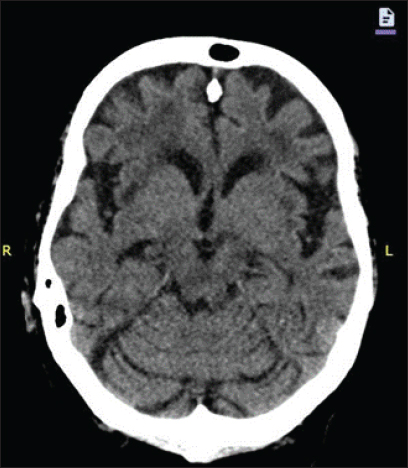
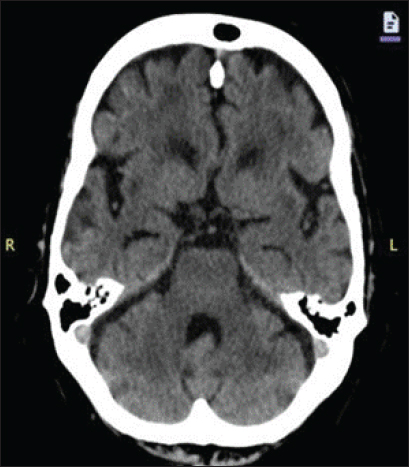
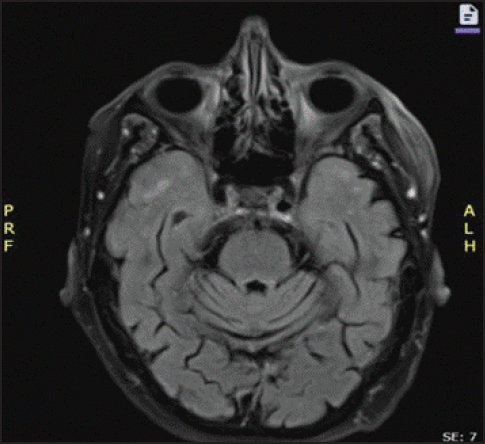
ABSTRACTBackground: Varicella-zoster virus (VZV) reactivation can rarely involve the central nervous system, leading to meningitis even in otherwise healthy elderly patients. Clinical presentation may be subtle, occasionally mimicking transient ischemic attacks or strokes, which can delay diagnosis. Case Description: We report an 85-year-old man with multiple vascular risk factors who experienced a brief episode of expressive aphasia. Neuroimaging showed no acute ischemia. Examination revealed a healing unilateral vesicular rash in the ophthalmic (V1) dermatome. Cerebrospinal fluid analysis demonstrated lymphocytic pleocytosis and elevated protein, and polymerase chain reaction testing confirmed VZV DNA. The patient was treated with a 14-day course of intravenous acyclovir, resulting in complete neurologic recovery. Conclusion: This case emphasizes the need to consider VZV meningitis in elderly patients presenting with transient neurological deficits, even without classic meningeal signs. Keywords: Acyclovir, Cerebrospinal fluid, Expressive aphasia, Varicella-zoster virus, VZV meningitis. IntroductionVaricella-zoster virus (VZV) is a neurotropic virus that remains latent in sensory ganglia after primary infection. Reactivation, typically later in life, causes herpes zoster, characterized by a painful, vesicular rash in a single dermatomal distribution. While the skin manifestations are classic, VZV can rarely affect the central nervous system (CNS), resulting in meningitis, encephalitis, vasculitis, or myelitis (Jia and Luong, 2021; Li et al., 2025). Although CNS involvement is more common in immunocompromised individuals, cases in elderly, otherwise healthy patients are increasingly recognized. Presentations may be subtle, and classic meningeal signs—fever, headache, or neck stiffness—may be absent, complicating diagnosis (Al Harbi et al., 2024). Neuroimaging is often normal, and confirmation relies on cerebrospinal fluid (CSF) analysis with polymerase chain reaction (PCR) testing for VZV (Jia and Luong, 2021). This case highlights the importance of considering VZV meningitis in elderly patients presenting with isolated neurological deficits, even in the absence of classic dermatologic or systemic symptoms. Case DetailsAn 85-year-old man with type 2 diabetes, paroxysmal atrial fibrillation on apixaban, prior transient ischemic attack, peripheral vascular disease, glaucoma, and depression presented after a brief episode of expressive aphasia noticed by his caregiver. The patient could not recall the exact duration or onset. He reported occasional speech difficulty with dentures, but this did not explain the acute episode. One week prior, he had developed a shingles rash on the left forehead and upper eyelid, consistent with herpes zoster ophthalmicus (V1 distribution). The rash was vesicular and crusting, with mild improvement after 7 days of oral antiviral therapy. He denied fever, headache, neck stiffness, photophobia, seizures, focal weakness, or sensory changes. On arrival, vital signs were temperature 36.8°C, blood pressure 123/69 mmHg, heart rate 77 beats per minute, respiratory rate 16 breaths per minute, and oxygen saturation 96% on room air. The patient was alert, cooperative, and in no acute distress. Neurological examination revealed orientation to person, place, and time, fluent speech, intact cranial nerves, symmetric motor strength and reflexes, normal sensation and coordination, and no lateralizing deficits. There were no meningeal signs; Kernig and Brudzinski tests were negative. Skin examination showed crusted vesicular lesions on the left forehead and upper eyelids. Ophthalmology evaluation revealed mild conjunctivitis without corneal or intraocular involvement. Laboratory evaluation revealed: white blood cell counts 6.6 ×10³/µl (reference 4.0–11.0 ×10³/µl), hemoglobin 11.9 g/dl (13–17 g/dl), platelet count 237 ×10³/µl (150–400 ×10³/µl), normal electrolytes, and normal renal function. Initial imaging included non-contrast head computed tomography (CT) (Fig. 1), which showed no acute hemorrhage, infarction, or mass effect. CT angiography of the head and neck (Fig. 2) demonstrated no large vessel occlusion or significant stenosis. Brain magnetic resonance imaging (MRI) (Fig. 3) was unremarkable.
Fig. 1. Non-contrast head CT of the head displaying no acute territorial ischemia, intracranial mass, or hemorrhage. Given the recent shingles and neurological deficit, a lumbar puncture was performed. CSF analysis revealed lymphocytic pleocytosis (9 cells/mm³), elevated protein (93 mg/dl), and normal glucose (62 mg/dl). Bacterial cultures were negative. PCR testing confirmed VZV DNA, while HSV-1, HSV-2, and enteroviruses were negative. The patient received intravenous acyclovir 10 mg/kg every 8 hours for 14 days via a peripherally inserted central catheter. He remained stable, experienced no recurrent symptoms, and achieved full neurological recovery. DiscussionThis case highlights an atypical presentation of VZV meningitis in an elderly patient presenting with transient expressive aphasia. Although VZV CNS involvement is well recognized, the presentation closely mimicked a transient ischemic attack in a patient with multiple vascular risk factors. The absence of classic meningeal symptoms and normal neuroimaging initially obscured the diagnosis, while the concurrent healing ophthalmic zoster rash raised suspicion for VZV-related CNS infection (Al Harbi et al., 2024). Neuroimaging is often unrevealing in VZV meningitis, making CSF analysis and PCR testing essential for diagnosis (Al Harbi et al., 2024; Dulin et al., 2024; Kitamura et al., 2025). In our patient, the initial differential diagnosis included transient ischemic attack, ischemic stroke, focal seizure, and metabolic causes because of multiple vascular risk factors. However, normal CT, CTA, and MRI findings, along with unremarkable laboratory results and positive CSF VZV PCR, supported the diagnosis of VZV meningitis. Clinicians should maintain a high index of suspicion for VZV CNS infection when shingles coexist with acute neurological symptoms, particularly in elderly patients (Jia and Luong, 2021; Li et al., 2025). An important diagnostic consideration was whether this presentation represented VZV meningitis, encephalitis, or VZV vasculopathy. The absence of altered mental status, cognitive impairment, and MRI abnormalities made encephalitis unlikely, while normal vascular imaging and complete neurological recovery argued against significant vasculopathy. Therefore, the clinical findings were most consistent with VZV meningitis presenting with a transient focal neurological deficit. Similar atypical presentations of VZV meningitis have been reported in both immunocompetent and immunocompromised patients, with neurological manifestations ranging from focal deficits to encephalitis and vasculitis (Sahra et al., 2021; Buranasakda et al., 2022; Peter, 2023; Al Harbi et al., 2024). Reactivation of dormant VZV in sensory ganglia, with centripetal spread via perineural or vascular routes to the leptomeninges, likely contributes to CNS involvement. Immune senescence and small vessel disease in older adults may exacerbate susceptibility (Yoshikane et al., 2024).
Fig. 2. CT Angiogram of the head and neck with and without contrast showing no acute intracranial process.
Fig. 3. MRI of the brain with and without contrast showing no acute intracranial process. Management centers on intravenous acyclovir, typically 10 mg/kg every 8 hours for 10–14 days, with hydration and renal monitoring to mitigate nephrotoxicity (Dulin et al., 2024; Kitamura et al., 2025). Timely treatment often results in complete recovery, as seen in our patient. Clinicians should consider VZV meningitis in elderly patients with acute or transient neurological symptoms and recent shingles, even if classic meningeal features are absent. Normal imaging should not preclude lumbar puncture and viral PCR testing. Early antiviral therapy improves outcomes and prevents neurological complications (Dulin et al., 2024; Kitamura et al., 2025). ConclusionThis case highlights the importance of considering VZV meningitis in elderly patients presenting with transient focal neurological deficits, particularly in the setting of recent or concurrent herpes zoster infection. Although cerebrovascular disease remains a common consideration in this population, VZV meningitis may present with stroke-like symptoms despite normal neuroimaging and the absence of classic meningeal signs. Clinicians should maintain a broad differential diagnosis and pursue CSF analysis with PCR testing when clinical suspicion exists. Early diagnosis and prompt antiviral therapy can result in excellent neurological outcomes and help prevent potential complications. AcknowledgmentsNone. Conflict of interestThe authors declare that there is no conflict of interest. FundingNone. Authors' contributionsAll authors contributed equally to this study. Data availabilityAll data were provided in the manuscript. ReferencesAl Harbi, A., Saeedi, J., Almowalad, E., Alahmari, R., Alzuabi, H.A., Almanea, L. and AlAbdulhadi, A. 2024. Arare case of Varicella-zoster virus meningitis with high intracranial pressure in an immunocompetent adult. Case. Reportsin. Cureus. 16(1), e52437; doi:10.7759/cureus.52437 Buranasakda, M., Kotruchin, P., Phanthachai, K., Mootsikapun, P. and Chetchotisakd, P. 2022. Varicella zoster meningitis following COVID-19 vaccination: a report of two cases. Int. J. Infect. Dis. 119, 214–216; doi:10.1016/j.ijid.2022.03.055 Dulin, M., Chevret, S., Salmona, M., Jacquier, H., Bercot, B., Molina, J.M., Lebeaux, D. and Munier, A.L. 2024. New insights into the therapeutic management of Varicella zoster virus meningitis: a series of 123 polymerase chain reaction – confirmed cases. Open. Forum. Infect. Dis. 11(7), 340; doi:10.1093/ofid/ofae340 Jia, S. and Luong, T. 2021. Atypical presentation of aseptic meningitis due to Varicella zoster: a case report. Clin. Pract. Cases. Emerg. Med. 5(4), 440–442; doi:10.5811/cpcem.2021.7.5359 Kitamura, A., Nakamura, R., Sugiyama, S., Tamura, R., Tsukamoto, T., Yabata, H., Kobashi, S., Tamaki, Y., Ogawa, N., Yamakawa, I., Terashima, T. and Urushitani, M. 2025. Clinical features of Varicella-zoster virus meningitis diagnosed by polymerase chain reaction without abnormal routine cerebrospinal fluid analysis. J. Neurovirol. 31, 501–506; doi:10.1007/s13365-025-01277-4 Li, J., Lin, Y., Ni, L., Mei, Y., Zhou, Y., Jiang, X. and Wan, W. 2025. Cerebral hemorrhage in Varicella-zoster virus encephalitis: a case study. Am. J. Case Rep. 26, e945521; doi:10.12659/AJCR.945521 Peter, K. 2023. The spectrum of neurological manifestations of Varicella–zoster virus reactivation. Viruses 15(8), 1663; doi:10.3390/v15081663 Sahra, S., Jahangir, A., Glaser, A., Mobarakai, N. and Ahmad, J. 2021. Aseptic meningitis secondary to Varicella-zoster virus without an exanthem post-MMR vaccination: a case report. BMC. Infect. Dis. 21, 746; doi:10.1186/s12879-021-06453-5 Yoshikane, A., Miura, H., Shima, S., Matsunaga, M., Ishimaru, S., Higashimoto, Y., Kawamura, Y., Kozawa, K., Yoshikawa, A., Ueda, A., Ota, A., Watanabe, H., Mutoh, T. and Yoshikawa, T. 2024. Increase in adult patients with Varicella zoster virus–related central nervous system infections, Japan. Emerg. Infect. Dis. 30(12), 2476–2482; doi:10.3201/eid3012.240538 | ||
| How to Cite this Article |
| Pubmed Style Lal S, Notta S, Vedantam H, Youssef D, Lal SGMS, Moore SG, Vedantam H, Notta S, Kumar B. Varicella-zoster virus meningitis presenting as transient expressive aphasia in an elderly patient with herpes zoster ophthalmicus. J Microbiol Infect Dis. 2026; 16(3): 156-159. doi:10.5455/JMID.2026.v16.i3.4 Web Style Lal S, Notta S, Vedantam H, Youssef D, Lal SGMS, Moore SG, Vedantam H, Notta S, Kumar B. Varicella-zoster virus meningitis presenting as transient expressive aphasia in an elderly patient with herpes zoster ophthalmicus. https://www.jmidonline.org/?mno=312305 [Access: July 25, 2026]. doi:10.5455/JMID.2026.v16.i3.4 AMA (American Medical Association) Style Lal S, Notta S, Vedantam H, Youssef D, Lal SGMS, Moore SG, Vedantam H, Notta S, Kumar B. Varicella-zoster virus meningitis presenting as transient expressive aphasia in an elderly patient with herpes zoster ophthalmicus. J Microbiol Infect Dis. 2026; 16(3): 156-159. doi:10.5455/JMID.2026.v16.i3.4 Vancouver/ICMJE Style Lal S, Notta S, Vedantam H, Youssef D, Lal SGMS, Moore SG, Vedantam H, Notta S, Kumar B. Varicella-zoster virus meningitis presenting as transient expressive aphasia in an elderly patient with herpes zoster ophthalmicus. J Microbiol Infect Dis. (2026), [cited July 25, 2026]; 16(3): 156-159. doi:10.5455/JMID.2026.v16.i3.4 Harvard Style Lal, S., Notta, . S., Vedantam, . H., Youssef, . D., Lal, . S. G. M. S., Moore, . S. G., Vedantam, . H., Notta, . S. & Kumar, . B. (2026) Varicella-zoster virus meningitis presenting as transient expressive aphasia in an elderly patient with herpes zoster ophthalmicus. J Microbiol Infect Dis, 16 (3), 156-159. doi:10.5455/JMID.2026.v16.i3.4 Turabian Style Lal, Shankar, Shahnawaz Notta, Harsha Vedantam, Dima Youssef, Savannah Grace Moore Shankar Lal, Savannah Gracie Moore, Harsha Vedantam, Shahnawaz Notta, and Beesham Kumar. 2026. Varicella-zoster virus meningitis presenting as transient expressive aphasia in an elderly patient with herpes zoster ophthalmicus. Journal of Microbiology and Infectious Diseases, 16 (3), 156-159. doi:10.5455/JMID.2026.v16.i3.4 Chicago Style Lal, Shankar, Shahnawaz Notta, Harsha Vedantam, Dima Youssef, Savannah Grace Moore Shankar Lal, Savannah Gracie Moore, Harsha Vedantam, Shahnawaz Notta, and Beesham Kumar. "Varicella-zoster virus meningitis presenting as transient expressive aphasia in an elderly patient with herpes zoster ophthalmicus." Journal of Microbiology and Infectious Diseases 16 (2026), 156-159. doi:10.5455/JMID.2026.v16.i3.4 MLA (The Modern Language Association) Style Lal, Shankar, Shahnawaz Notta, Harsha Vedantam, Dima Youssef, Savannah Grace Moore Shankar Lal, Savannah Gracie Moore, Harsha Vedantam, Shahnawaz Notta, and Beesham Kumar. "Varicella-zoster virus meningitis presenting as transient expressive aphasia in an elderly patient with herpes zoster ophthalmicus." Journal of Microbiology and Infectious Diseases 16.3 (2026), 156-159. Print. doi:10.5455/JMID.2026.v16.i3.4 APA (American Psychological Association) Style Lal, S., Notta, . S., Vedantam, . H., Youssef, . D., Lal, . S. G. M. S., Moore, . S. G., Vedantam, . H., Notta, . S. & Kumar, . B. (2026) Varicella-zoster virus meningitis presenting as transient expressive aphasia in an elderly patient with herpes zoster ophthalmicus. Journal of Microbiology and Infectious Diseases, 16 (3), 156-159. doi:10.5455/JMID.2026.v16.i3.4 |


