






| Research Article | ||
J Microbiol Infect Dis. 2026; 16(3): 150-155 J. Microbiol. Infect. Dis., (2026), Vol. 16(3): 150–155 Research Article A preliminary cross-sectional study of sandfly-borne phleboviruses in febrile Malaria-Negative patients in SudanAbdel Rahim M. El Hussein1, Mohamed O. Mustafa1, Isam M. Elkhidir2, Mutaz A. Elsir1, Dina N. Abdelrahman1, Razan A Bashir1, Tarteel Hassan1, Hassan M Madani1, Musab D. Hassan1, Awad Alkareem Y. Awadalkareem1, Halah Alkorbi3 and Khalid A. Enan1,3*1Department of Virology, Central Laboratory, Ministry of Higher Education and Scientific Research, Khartoum, Sudan 2Department of Microbiology and Parasitology, Faculty of Medicine, University of Khartoum, Khartoum, Sudan 3Preventive Reference Laboratory, Department of Health Protection and Communicable Diseases Control, Ministry of Public Health, Doha, Qatar *Corresponding Author: Khalid A. Enan. Department of Virology, Central Laboratory, Ministry of Higher Education and Scientific Research, Khartoum, Sudan. Email: khalid.enan [at] gmail.com Submitted: 06/02/2026 Revised: 25/05/2026 Accepted: 11/06/2026 Published: 25/07/2026 © 2025 Journal of Microbiology and Infectious Diseases
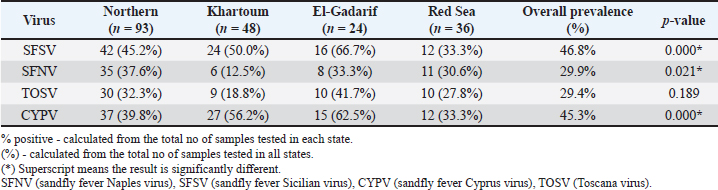
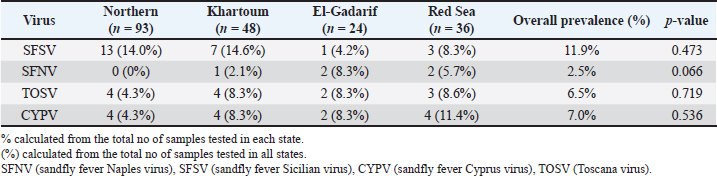
ABSTRACTBackground: Sandfly fever viruses (Phleboviruses, family Phenuiviridae) are important but neglected causes of febrile illness in Africa, the Mediterranean Basin, the Middle East, and Central Asia. Their clinical presentation overlaps with malaria and enteric fever, complicating diagnosis. In Sudan, historical studies documented outbreaks in Northern and Khartoum provinces, but targeted seroprevalence data remain limited, and no recent surveys have addressed their broader distribution. Aim: This study aimed to uncover hidden viral etiologies and provide evidence for the endemic circulation of these pathogens Methods: We conducted a cross-sectional serological study of 201 febrile, Malaria-Negative patients from Northern, Khartoum, El-Gadarif, and Red Sea states. Serum samples were tested for immunoglobulin G (IgG) and immunoglobulin M (IgM) antibodies against Sandfly Fever Sicilian Virus (SFSV), Sandfly Fever Naples Virus (SFNV), Toscana Virus (TOSV), and Cyprus Virus (CYPV) using a highly specific Indirect Flouresence AntibodyTechnique for detection of IgM and IgG. Statistical analysis assessed prevalence differences between states. Results: IgG antibodies against all four viruses were detected in all states, confirming widespread exposure. Overall IgG prevalence was highest for SFSV (46.7%) and CYPV (45.3%), followed by SFNV (29.9%) and TOSV (29.4%). Significant differences between states were observed for SFSV, SFNV, and CYPV (p < 0.05). IgM antibodies, reflecting recent infection, were less frequent, with overall prevalence ranging from 2.5% (SFNV) to 12.7% (SFSV). SFNV IgM was absent in Northern state but present in the other three states. Notably, antibodies against CYPV and TOSV were detected for the first time in Sudan, expanding the known spectrum of circulating phleboviruses. Conclusion: This study provides new evidence of the endemic circulation of four sandfly fever viruses in Sudan, including the first reports of CYPV and TOSV. High IgG prevalence underscores widespread past exposure, while IgM detection indicates ongoing transmission. These findings highlight the need to consider phleboviruses in the differential diagnosis of febrile illnesses in Malaria-Negative patients and emphasize the importance of further epidemiological, molecular, and virological investigations to assess their distribution, burden, and public health impact. Keywords: Febrile patients, IFA, Sandfly phleboviruses, Seroprevalence, Sudan. IntroductionPhleboviruses, members of the family Phenuiviridae and genus Phlebovirus, constitute a diverse group of arthropod-borne viruses with a broad geographic distribution encompassing Europe, Africa, Central Asia, and the Americas. More than 60 distinct phleboviruses have been identified, yet the majority remain genetically uncharacterized, underscoring the need for further molecular and epidemiological investigations (Kuhn et al., 2020). These viruses are transmitted primarily by sandflies (Phlebotomus spp.), which serve as competent vectors in endemic regions. Several phleboviruses have been implicated in human disease, with four serotypes most frequently associated with clinical infections: Sandfly Fever Naples Virus (SFNV), Sandfly Fever Sicilian Virus (SFSV), Sandfly Fever Cyprus Virus (CYPV), and Toscana Virus (TOSV) (Dehghani et al., 2021). Sandfly fever is a seasonal illness that typically emerges during the summer months, with incidence peaking in August, coinciding with the maximum activity of sandfly populations (Trájer, 2019). Clinically, the disease is characterized by an abrupt onset of fever accompanied by headache, anorexia, myalgia, photophobia, retro-orbital pain, back pain, and generalized malaise. Haematological abnormalities are common, particularly leukopenia, which manifests initially as lymphopenia followed by prolonged neutropenia. Gastrointestinal symptoms, including transient diarrhoea, constipation, and abdominal discomfort, may also occur (Dehghani et al., 2021). Importantly, TOSV has emerged as a neurotropic pathogen capable of causing severe neurological complications such as meningitis, encephalitis, and meningoencephalitis, particularly in Mediterranean countries. These neurological manifestations highlight the potential severity of phlebovirus infections and their capacity to extend beyond self-limiting febrile illness (Ayhan et al., 2025). Laboratory diagnosis of phlebovirus infections is difficult. Acute confirmation relies on virus isolation or PCR detection, while serological assays such as ELISA and immunofluorescence identify immunoglobulin M (IgM)/immunoglobulin G (IgG) antibodies. Cross-reactivity complicates interpretation, although newer immunofluorescence platforms improve sensitivity, affordability, and surveillance utility, especially in resource-limited settings (Escadafal, 2014). Despite their recognized clinical importance, phleboviruses remain under-investigated in many endemic regions. In sub-Saharan Africa, febrile illnesses are frequently attributed to malaria, which dominates the diagnostic landscape. This bias may mask the true burden of sandfly fever viruses and delay appropriate public health interventions (Hogenhout et al., 2008). In Sudan, with its diverse ecological zones, widespread sandfly populations, and high incidence of febrile illnesses, it represents a critical setting for investigating the epidemiology of phleboviruses (Ahmed et al., 2020). To address this gap, the present preliminary cross-sectional study was conducted to assess the seroprevalence of antibodies against selected phleboviruses, SFSV, SFNV, TOSV, and CYPV, among febrile patients who tested negative for malaria in four states of Sudan. By focusing on Malaria-Negative febrile cases, this study aimed to uncover hidden viral etiologies and provide evidence for the endemic circulation of these pathogens. Material and MethodsStudy design and sample collectionThis was a cross-sectional, hospital-based serosurveillance study conducted between January and April 2017 in selected healthcare facilities across Sudan. Febrile patients who tested negative for Plasmodium falciparum, Plasmodium ovale, and Plasmodium malariae by microscopy were enrolled. Inclusion was based solely on the presence of fever (≥ 38°C) and malaria negativity. No additional exclusion criteria were applied. A total of 201 human serum samples were collected from febrile Malaria-Negative patients in three locations in Northern state (n=93), two locations in Khartoum state (n=48), one location in El-Gadarif (n=24), and one location in Red Sea state (n=36) in Sudan (Fig. 1), during January to April 2017. Demographic data (e.g age, sex, and occupation) were also collected. However, they were incomplete and inconsistent for many individuals and crossed several study sites; hence, we opted not to include these data in the final data analysis. Study design and sample collectionImmunofluorescence assayThe samples were tested for SFSV, SFNV, TOSV, and CYPV IgG and IgM antibodies using the Sandfly fever virus Mosaic 1 IFA kit (Euroimmun, Germany) according to the manufacturer’s instructions. The sensitivity of the test system is 100% for both IgM and IgG, while the specificity of the used kit is 92% and 100% for IgG and IgM, respectively. Statistical analysisDescriptive statistics were used to summarize seroprevalence rates by virus type. Frequencies and percentages were calculated using Microsoft Excel and SPSS (version 25.0, IBM Corp.). Confidence intervals (95%) were calculated for prevalence estimates. No co-infection analyses were performed due to database limitations. Ethical approvalThe study was approved by the Ethical Review Committee (ERC) of the Ministry of Health, Khartoum state (No: NHRERC/CL/30/2016), Sudan. Informed written consent was obtained regarding data and blood sample collection from each patient. Only patients who agreed to participate were enrolled in the study. ResultsA total of 201 febrile, Malaria-Negative patients from four Sudanese states (Northern, Khartoum, El-Gadarif, and Red Sea) were screened for IgG and IgM antibodies against SFSV, SFNV, TOSV, and CYPV. The detailed prevalence patterns are presented in Tables 1 and 2. IgG antibodies were detected at high frequencies, confirming widespread past exposure to phleboviruses. Prevalence varied by virus and state, ranging from 4.4% (TOSV in Khartoum) to 66.7% (SFSV in El-Gadarif). Overall IgG prevalence across the study population was 29.4% for TOSV, 29.9% for SFNV, 45.3% for CYPV, and 46.8% for SFSV. Statistically significant differences between states were observed for SFSV, SFNV, and CYPV (p < 0.05), while TOSV prevalence did not differ significantly (Table 1). IgM antibodies, indicative of recent infection, were less frequent. Prevalence ranged from 0% (SFNV in Northern state) to 14.6% (SFSV in Khartoum). Overall IgM prevalence was 2.5% for SFNV, 6.5% for TOSV, 7.0% for CYPV, and 11.9% for SFSV. No significant differences between states were observed for IgM prevalence (Table 2). When antibody responses were considered collectively, 81.6% of patients were positive for IgG to at least one phlebovirus, while 27.9% were positive for IgM. Co-positivity (IgG + IgM) was observed in 20.4% of patients, suggesting active infections in previously exposed individuals. Notably, nearly half of the patients (47.3%) had IgG antibodies to two or more viruses, reflecting overlapping exposures and possible antigenic cross-reactivity.
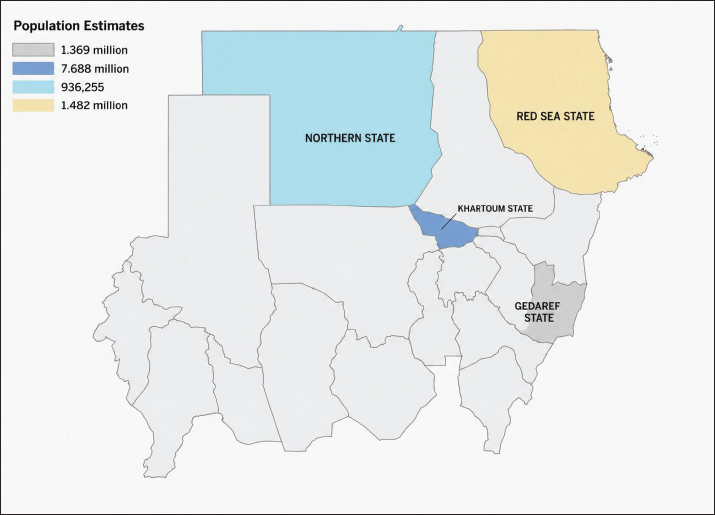
Fig. 1. Geographical view of Sudan highlighting Northern state, Khartoum state, El-Gadarif, and Red Sea state where the serum samples were collected. Source: https://fews.net/east-africa/sudan/food-security-outlook/february-2024. Overall, these findings confirm the endemic circulation of multiple phleboviruses in Sudan, with evidence of both past and recent transmission. The high IgG prevalence underscores widespread exposure, while the presence of IgM antibodies highlights ongoing viral activity, particularly for SFSV and CYPV. DiscussionSandfly fever viruses, members of the genus Phlebovirus within the family Phenuiviridae, remain a significant public health concern in many regions of the world, including Africa, the Mediterranean Basin, the Middle East, and Central Asia (Ergunay et al., 2017). The diagnostic overlap contributes to under-recognition of phleboviruses in endemic regions, where malaria is often presumed to be the primary cause of fever. Several early studies in Sudan highlighted the presence of arboviruses, including sandfly fever viruses and Rift Valley fever virus, among febrile patients (Ahmed et al., 2020). However, targeted seroprevalence studies focusing specifically on sandfly-borne phleboviruses have been limited. Historical reports documented sandfly fever cases in Sudan using neutralization tests (Tesh et al., 1976) and later by ELISA in 1989 and 1996, including outbreaks in Northern and Khartoum provinces (Watts et al., 1994; McCarthy et al., 1996). In the 1989 Northern province study, IgG antibody prevalence was 53% for SFSV and 32% for SFNV, while IgM antibodies to SFNV reached 24%, with reciprocal titres exceeding 12,800 in some individuals, strongly implicating SFNV as the cause of the febrile outbreak (Watts et al., 1994). Similarly, Mccarthy et al. (1996)reported that among 196 febrile patients in Khartoum, 6% and 8% were reactive for IgM antibodies to SFSV and SFNV, respectively, while IgG reactivity was 54% and 34%. These findings confirmed the circulation of sandfly fever viruses in Sudan but left many questions unanswered regarding their broader distribution and epidemiological impact. Table 1. Sandfly fever viruses IgG antibodies in Northern state, Khartoum state, El-Gadarif state, and Red Sea state.
Table 2. Sandfly fever viruses IgM antibodies in Northern state, Khartoum state, El-Gadarif, and Red Sea state.
The present study expands upon these earlier investigations by providing seroprevalence data from four Sudanese states: Northern, Khartoum, El-Gadarif, and Red Sea. Our results demonstrate widespread IgG antibody positivity to all four targeted phleboviruses (SFSV, SFNV, TOSV, and CYPV), confirming their endemic presence. Overall, IgG prevalence was highest for SFSV (46.8%) and CYPV (45.3%), followed by SFNV (29.9%) and TOSV (29.4%). Significant differences in IgG prevalence between states were observed for SFSV, SFNV, and CYPV, suggesting heterogeneous transmission dynamics influenced by ecological and vector-related factors. The detection of IgG antibodies across all states indicates that exposure to phleboviruses is not localized but rather widespread, reflecting the broad distribution of sandfly vectors in Sudan. IgM antibody prevalence was lower, ranging from 2.5% (SFNV) to 11.9% (SFSV), consistent with the expectation that IgM reflects recent infection. Notably, SFNV IgM antibodies were absent in Northern state but present in the other three states, highlighting possible regional differences in current transmission. The highest IgM prevalence was observed for SFSV in Khartoum (14.6%), suggesting ongoing circulation in urban or peri-urban settings. Although no statistically significant differences in IgM prevalence were observed between states, the detection of IgM antibodies provides presumptive evidence of active infections. Given the specificity of the Indirect Flouresence AntibodyTechnique used, these findings strongly support the role of sandfly fever viruses as contributors to febrile illness in Malaria-Negative patients. However, definitive diagnosis will require virus isolation or molecular detection of viral RNA by PCR. Importantly, our study provides the first evidence of antibodies against CYPV and TOSV in Sudan. These findings may explain the “unidentified phleboviruses” reported by Mccarthy et al. (1996)during the Khartoum outbreak. The detection of these serotypes expands the known spectrum of phleboviruses circulating in Sudan and underscores the need for molecular characterization to confirm their identity and genetic diversity. TOSV, in particular, is recognized as a neurotropic virus capable of causing meningitis and encephalitis in Mediterranean countries (Ayhan et al., 2024; Ayhan et al., 2025). Its presence in Sudan raises important questions about the potential burden of neurological disease attributable to phleboviruses in this region, which may currently be underdiagnosed. The high prevalence of IgG antibodies, particularly for SFSV and CYPV, indicates that phleboviruses are endemic and widely distributed in Sudan. Nearly half of the patients in our study had IgG antibodies to two or more viruses, reflecting overlapping exposures and possible antigenic cross-reactivity. This finding highlights the complexity of serological interpretation in phlebovirus epidemiology and the need for more refined diagnostic tools. The co-circulation of multiple phleboviruses also raises concerns about the potential for misdiagnosis and underestimation of their contribution to febrile illness (Amaro et al., 2015). From a public health perspective, these results emphasize the importance of considering sandfly fever viruses in the differential diagnosis of febrile illnesses, particularly in Malaria-Negative patients. The reliance on malaria diagnostics alone risks overlooking other endemic pathogens, leading to mismanagement of cases and underestimation of disease burden. Our findings call for integrated surveillance systems that include arboviruses alongside malaria and other common febrile illnesses. Strengthening laboratory capacity for molecular diagnostics, serological assays, and virus isolation will be critical to improving case detection and outbreak response (Mfuh, 2017). Furthermore, the detection of CYPV and TOSV antibodies highlights the need for expanded research into the diversity of phleboviruses in Sudan. Genomic sequencing and phylogenetic analysis will be essential to characterize circulating strains, assess their evolutionary relationships, and identify potential novel variants. Epidemiological studies should also investigate risk factors for infection, including vector distribution, environmental conditions, and human behaviors that facilitate exposure. Such data will inform targeted interventions, including vector control strategies and public health education. ConclusionThis study demonstrates the endemic presence of four sandfly fever viruses, SFSV, SFNV, CYPV, and TOSV, among febrile, Malaria-Negative patients in Sudan. The identification of CYPV and TOSV antibodies represents the first evidence of these serotypes in Sudan, expanding the known spectrum of circulating phleboviruses. These findings underscore the need to consider phleboviruses in the differential diagnosis of febrile illnesses and highlight the importance of further epidemiological, molecular, and virological investigations to assess their burden and public health impact. AcknowledgmentThe authors would like to sincerely thank the Robert Koch Institute (RKI) team, Germany, for their valuable support, provision of reagents, and funding assistance for this study. The authors also gratefully acknowledge the Central Laboratory staff for their help, encouragement, and continuous support throughout the study. Conflict of interestThe authors declare that there is no conflict of interest. FundingNone. Authors' contributionsAll authors contributed equally to this study. Data availabilityThe data supporting the findings of this study are available from the corresponding author, Dr. Khalid A. Enan, upon reasonable request. Due to ethical and privacy restrictions imposed by the Federal Ministry of Health, Sudan, individual-level patient data cannot be made publicly available. ReferencesAhmed, A., Dietrich, I., Labeaud, A.D., Lindsay, S.W., Musa, A. and Weaver, S.C. 2020. Risks and challenges of arboviral diseases in Sudan: the urgent need for actions. Viruses 12(1), 81. Amaro, F., Zé-Zé, L., Alves, M.J., Börstler, J., Clos, J., Lorenzen, S., Becker, S.C., Schmidt-Chanasit, J. and Cadar, D. 2015. Co-circulation of a novel phlebovirus and Massilia virus in sandflies, Portugal. Virol. J. 12(1), 174. Ayhan, N., Eldin, C. and Charrel, R. 2025. Toscana virus: a comprehensive review of 1381 cases showing an emerging threat in the Mediterranean regions. J. Infection. 90(2), 106415. Ayhan, N., Eldin, C. and Charrel, R. 2024. Toscana virus infection clinical characterization. MedRxiv 2024-07. Dehghani, R., Kassiri, H., Khodkar, I. and Karami, S. 2021. A comprehensive overview on sandfly fever. J. Acute Dis. 10(3), 98–106. Ergunay, K., Ayhan, N. and Charrel, R.N. 2017. Novel and emergent sandfly-borne phleboviruses in Asia Minor: a systematic review. Rev. Med. Virol. 27(2), e1898. Escadafal, C. 2014. Evaluation of diagnostic methods for vector-borne viral infections and development of tools for the study of yellow fever infections. Doctoral dissertation, Freie Universität Berlin, Faculty of Veterinary Medicine, Berlin, Germany, 221 p. Hogenhout, S.A., Ammar, E.D., Whitfield, A.E. and Redinbaugh, M.G. 2008. Insect vector interactions with persistently transmitted viruses. Annu. Rev. Phytopathol. 46(1), 327–359. Kuhn, J.H., Adkins, S., Alioto, D., Alkhovsky, S.V., Amarasinghe, G.K., Anthony, S.J., Avšič-Županc, T., Ayllón, M.A., Bahl, J., Balkema-Buschmann, A., Ballinger, M.J., Bartonička, T., Basler, C., Bavari, S., Beer, M., Bente, D.A., Bergeron, E., Bird, B.H., Blair, C., Blasdell, K.R., Bradfute, S.B., Breyta, R., Briese, T., Brown, P.A., Buchholz, U.J., Buchmeier, M.J., Bukreyev, A., Burt, F., Buzkan, N., Calisher, C.H., Cao, M., Casas, I., Chamberlain, J., Chandran, K., Charrel, R.N., Chen, B., Chiumenti, M., Choi, I.R., Clegg, J.C.S., Crozier, I., Da Graça, J.V., Dal Bó, E., Dávila, A.M.R., De La Torre, J.C., De Lamballerie, X., De Swart, R.L., Di Bello, P.L., Di Paola, N., Di Serio, F., Dietzgen, R.G., Digiaro, M., Dolja, V.V., Dolnik, O., Drebot, M.A., Drexler, J.F., Dürrwald, R., Dufkova, L., Dundon, W.G., Duprex, W.P., Dye, J.M., Easton, A.J., Ebihara, H., Elbeaino, T., Ergünay, K., Fernandes, J., Fooks, A.R., Formenty, P.B.H., Forth, L.F., Fouchier, R.A.M., Freitas-Astúa, J., Gago-Zachert, S., Gāo, G.F., García, M.L., García-Sastre, A., Garrison, A.R., Gbakima, A., Goldstein, T., Gonzalez, J.J., Griffiths, A., Groschup, M.H., Günther, S., Guterres, A., Hall, R.A., Hammond, J., Hassan, M., Hepojoki, J., Hepojoki, S., Hetzel, U., Hewson, R., Hoffmann, B., Hongo, S., Höper, D., Horie, M., Hughes, H.R., Hyndman, T.H., Jambai, A., Jardim, R., Jiāng, D., Jin, Q., Jonson, G.B., Junglen, S., Karadağ, S., Keller, K.E., Klempa, B., Klingström, J., Kobinger, G., Kondō, H., Koonin, E.V., Krupovic, M., Kurath, G., Kuzmin, I.V., Laenen, L., Lamb, R.A., Lambert, A.J., Langevin, S.L., Lee, B., Lemos, E.R.S., Leroy, E.M., Li, D., Lǐ, J., Liang, M., Liú, W., Liú, Y., Lukashevich, I.S., Maes, P., Marciel De Souza, W., Marklewitz, M., Marshall, S.H., Martelli, G.P., Martin, R.R., Marzano, S.L., Massart, S., Mccauley, J.W., Mielke-Ehret, N., Minafra, A., Minutolo, M., Mirazimi, A., Mühlbach, H.P., Mühlberger, E., Naidu, R., Natsuaki, T., Navarro, B., Navarro, J.A., Netesov, S.V., Neumann, G., Nowotny, N., Nunes, M.R.T., Nylund, A., Økland, A.L., Oliveira, R.C., Palacios, G., Pallas, V., Pályi, B., Papa, A., Parrish, C.R., Pauvolid-Corrêa, A., Pawęska, J.T., Payne, S., Pérez, D.R., Pfaff, F., Radoshitzky, S.R., Rahman, A.U., Ramos-González, P.L., Resende, R.O., Reyes, C.A., Rima, B.K., Romanowski, V., Robles Luna, G., Rota, P., Rubbenstroth, D., Runstadler, J.A., Ruzek, D., Sabanadzovic, S., Salát, J., Sall, A.A., Salvato, M.S., Sarpkaya, K., Sasaya, T., Schwemmle, M., Shabbir, M.Z., Shí, X., Shí, Z., Shirako, Y., Simmonds, P., Širmarová, J., Sironi, M., Smither, S., Smura, T., Song, J.W., Spann, K.M., Spengler, J.R., Stenglein, M.D., Stone, D.M., Straková, P., Takada, A., Tesh, R.B., Thornburg, N.J., Tomonaga, K., Tordo, N., Towner, J.S., Turina, M., Tzanetakis, I., Ulrich, R.G., Vaira, A.M., Van Den Hoogen, B., Varsani, A., Vasilakis, N., Verbeek, M., Wahl, V., Walker, P.J., Wang, H., Wang, J., Wang, X., Wang, L.F., Wèi, T., Wells, H., Whitfield, A.E., Williams, J.V., Wolf, Y.I., Wú, Z., Yang, X., Yáng, X., Yu, X., Yutin, N., Zerbini, F.M., Zhang, T., Zhang, Y.Z., Zhou, G. and Zhou, X. 2020. 2020 taxonomic update for phylum Negarnaviricota (Riboviria: orthornavirae), including the large orders Bunyavirales and Mononegavirales. Arch. Virol. 165, 3023–3072; doi:10.1007/s00705-020-04731-2 Mccarthy, M.C., Haberberger, R.L., Salib, A.W., Soliman, B.A., El-Tigani, A., Khalid, I.O. and Watts, D.M. 1996. Evaluation of arthropod-borne viruses and other infectious disease pathogens as the causes of febrile illnesses in the Khartoum Province of Sudan. J. Med. Virol. 48(2), 141–146. Mfuh, K.O. 2017. Infectious etiologies of febrile illnesses in Cameroon. Doctoral dissertation, University of Hawai'i at Manoa, Honolulu, HI. Tesh, R.B., Saidi, S., Gajdamovič, S.J., Rodhain, F. and Vesenjak-Hirjan, J.E.L.K.A. 1976. Serological studies of the epidemiology of sandfly fever in the Old World. Bull. World. Health. Org. 54(6), 663. Trájer, A.J. 2019. The ecology of mosquito and sandfly vectors and their pathogens in a changing environment. Doctoral dissertation, Pannon Egyetem, Veszprém, Hungary. Watts, D.M., El-Tigani, A., Botros, B.A., Salib, A.W., Olson, J.G., McCarthy, M. and Ksiazek, T.G. 1994. Arthropod-borne viral infectious infections associated with a fever outbreak in the Northern Province of Sudan. J. Trop. Med. Hyg. 97(4), 228–230. | ||
| How to Cite this Article |
| Pubmed Style Hussein ARME, Mustafa MO, Elkhidir IM, Elsir MA, Abdelrahman DN, Bashir RA, Hassan T, Madani HM, Hassan MD, Awadalkareem AAY, Alkorbi H, Enan KA. preliminary cross-sectional study of sandfly-borne phleboviruses in febrile Malaria-Negative patients in Sudan. J Microbiol Infect Dis. 2026; 16(3): 150-155. doi:10.5455/JMID.2026.v16.i3.3 Web Style Hussein ARME, Mustafa MO, Elkhidir IM, Elsir MA, Abdelrahman DN, Bashir RA, Hassan T, Madani HM, Hassan MD, Awadalkareem AAY, Alkorbi H, Enan KA. preliminary cross-sectional study of sandfly-borne phleboviruses in febrile Malaria-Negative patients in Sudan. https://www.jmidonline.org/?mno=309539 [Access: July 25, 2026]. doi:10.5455/JMID.2026.v16.i3.3 AMA (American Medical Association) Style Hussein ARME, Mustafa MO, Elkhidir IM, Elsir MA, Abdelrahman DN, Bashir RA, Hassan T, Madani HM, Hassan MD, Awadalkareem AAY, Alkorbi H, Enan KA. preliminary cross-sectional study of sandfly-borne phleboviruses in febrile Malaria-Negative patients in Sudan. J Microbiol Infect Dis. 2026; 16(3): 150-155. doi:10.5455/JMID.2026.v16.i3.3 Vancouver/ICMJE Style Hussein ARME, Mustafa MO, Elkhidir IM, Elsir MA, Abdelrahman DN, Bashir RA, Hassan T, Madani HM, Hassan MD, Awadalkareem AAY, Alkorbi H, Enan KA. preliminary cross-sectional study of sandfly-borne phleboviruses in febrile Malaria-Negative patients in Sudan. J Microbiol Infect Dis. (2026), [cited July 25, 2026]; 16(3): 150-155. doi:10.5455/JMID.2026.v16.i3.3 Harvard Style Hussein, A. R. M. E., Mustafa, . M. O., Elkhidir, . I. M., Elsir, . M. A., Abdelrahman, . D. N., Bashir, . R. A., Hassan, . T., Madani, . H. M., Hassan, . M. D., Awadalkareem, . A. A. Y., Alkorbi, . H. & Enan, . K. A. (2026) preliminary cross-sectional study of sandfly-borne phleboviruses in febrile Malaria-Negative patients in Sudan. J Microbiol Infect Dis, 16 (3), 150-155. doi:10.5455/JMID.2026.v16.i3.3 Turabian Style Hussein, Abdel Rahim M. El, Mohamed O. Mustafa, Isam M. Elkhidir, Mutaz A. Elsir, Dina N. Abdelrahman, Razan A Bashir, Tarteel Hassan, Hassan M Madani, Musab D. Hassan, Awad Alkareem Y. Awadalkareem, Halah Alkorbi, and Khalid A. Enan. 2026. preliminary cross-sectional study of sandfly-borne phleboviruses in febrile Malaria-Negative patients in Sudan. Journal of Microbiology and Infectious Diseases, 16 (3), 150-155. doi:10.5455/JMID.2026.v16.i3.3 Chicago Style Hussein, Abdel Rahim M. El, Mohamed O. Mustafa, Isam M. Elkhidir, Mutaz A. Elsir, Dina N. Abdelrahman, Razan A Bashir, Tarteel Hassan, Hassan M Madani, Musab D. Hassan, Awad Alkareem Y. Awadalkareem, Halah Alkorbi, and Khalid A. Enan. "preliminary cross-sectional study of sandfly-borne phleboviruses in febrile Malaria-Negative patients in Sudan." Journal of Microbiology and Infectious Diseases 16 (2026), 150-155. doi:10.5455/JMID.2026.v16.i3.3 MLA (The Modern Language Association) Style Hussein, Abdel Rahim M. El, Mohamed O. Mustafa, Isam M. Elkhidir, Mutaz A. Elsir, Dina N. Abdelrahman, Razan A Bashir, Tarteel Hassan, Hassan M Madani, Musab D. Hassan, Awad Alkareem Y. Awadalkareem, Halah Alkorbi, and Khalid A. Enan. "preliminary cross-sectional study of sandfly-borne phleboviruses in febrile Malaria-Negative patients in Sudan." Journal of Microbiology and Infectious Diseases 16.3 (2026), 150-155. Print. doi:10.5455/JMID.2026.v16.i3.3 APA (American Psychological Association) Style Hussein, A. R. M. E., Mustafa, . M. O., Elkhidir, . I. M., Elsir, . M. A., Abdelrahman, . D. N., Bashir, . R. A., Hassan, . T., Madani, . H. M., Hassan, . M. D., Awadalkareem, . A. A. Y., Alkorbi, . H. & Enan, . K. A. (2026) preliminary cross-sectional study of sandfly-borne phleboviruses in febrile Malaria-Negative patients in Sudan. Journal of Microbiology and Infectious Diseases, 16 (3), 150-155. doi:10.5455/JMID.2026.v16.i3.3 |


